A constitutional lawyer handles disputes about what the government may and may not do: whether a city can regulate away the value of private land, whether an agency followed the process the law requires before acting, whether a statute treats similar people differently without a good reason, and whether a rule restricting speech or religion can survive review. In Nevada that work runs under two constitutions at once. The United States Constitution sets the floor, and the Nevada Constitution, particularly Article 1, the Declaration of Rights, often reaches further.
This article explains what constitutional lawyers actually do, the claims that make up most of the practice in Nevada, where those cases are filed, and when a business, a property owner, or a public official should involve counsel. Hutchison & Steffen practices constitutional law on both sides: it challenges government overreach for individuals and corporations, and it represents states and government officials defending legislation, with a track record that includes the Nevada Supreme Court and the United States Supreme Court.
If a government action is affecting your property, your business, or your rights, call the Las Vegas office at 702.385.2500 or the Reno office at 775.853.8746, or reach the Firm through hutchlegal.com/contact.
What a Constitutional Lawyer Actually Does
A constitutional lawyer is a litigator whose cases turn on the limits of government power. The client may be a landowner, a company facing a new regulation, a public employee, a candidate, a county, or the State of Nevada itself. The opposing party is almost always a government body, which brings immunity doctrines, notice requirements, and shortened deadlines that do not exist in ordinary civil litigation.
The first job is identifying which provision the government action implicates and which standard of review a court will apply, because that standard decides most cases before they are filed. A law that burdens a fundamental right or targets a suspect classification must survive strict scrutiny, which few laws do. A law regulating ordinary economic activity needs only a rational basis, which nearly every law has. Between those poles sit intermediate standards for sex-based classifications and commercial speech. Where a claim falls on that spectrum is the first thing a constitutional attorney determines and the first thing a client should ask about.
The second job is building the record: public records requests, legislative history, agency files, and often appraiser or economist testimony. Many of these matters are decided on motions and a large share end up on appeal, which is why the Firm’s constitutional work runs alongside its appellate litigation practice.
Why the Nevada Constitution Matters More Than People Expect
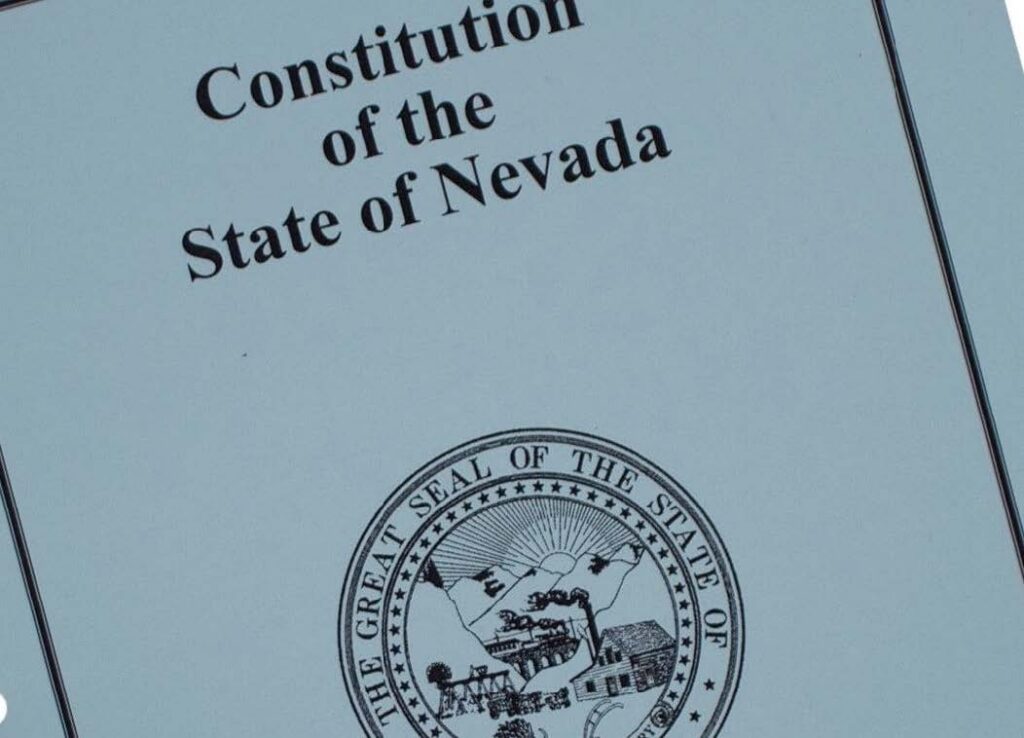
Nevada’s Declaration of Rights is in several places more protective than the federal Bill of Rights, and the practical significance grew in December 2022. In Mack v. Williams, 138 Nev. Adv. Op. 86, the Nevada Supreme Court held unanimously that a person whose search-and-seizure rights under Article 1, Section 18 are violated may sue for money damages directly under the state constitution, and that qualified immunity, the federal doctrine that shields officials from most damages claims, does not apply to that state-law claim. Litigation over which other provisions support a damages action is ongoing.
For a plaintiff, that opens a route around the defenses that end many federal civil rights cases. For a public entity, the analysis has to be repeated under state law, where the defenses are different.
Takings and Inverse Condemnation
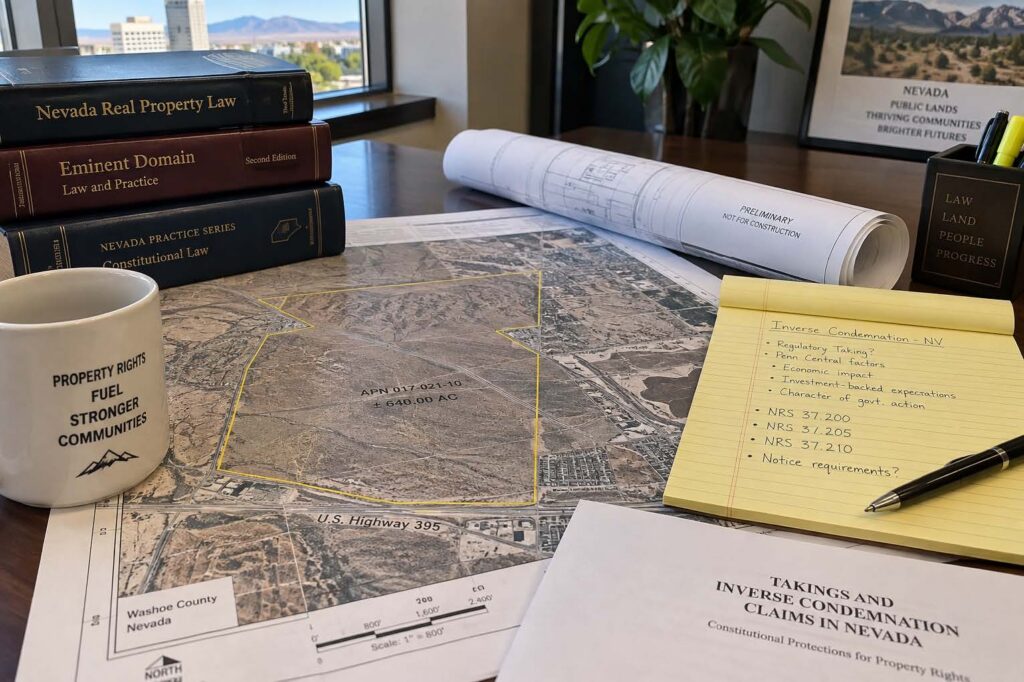
A direct condemnation is the government’s own action under NRS Chapter 37, and the dispute is usually about price; the Firm’s condemnation law practice handles those for owners. An inverse condemnation claim is the reverse: nothing has been filed, but a regulation or public project has taken the property’s value, and the owner sues to be paid.
Nevada’s leading inverse condemnation case arose in Las Vegas. In McCarran International Airport v. Sisolak, 122 Nev. 645 (2006), the Nevada Supreme Court held that a county height-restriction ordinance protecting airport flight paths was a per se regulatory taking of the airspace over the owner’s parcel, because it authorized a permanent physical invasion, and affirmed a $6.5 million jury award. A Nevada landowner facing a zoning overlay, flight easement, or access restriction should have the facts reviewed before assuming the loss is a cost of doing business.
Due Process and Equal Protection
Due process claims under the Fourteenth Amendment and Article 1, Section 8 divide into two kinds. Procedural due process is about how the government acted: before depriving a person of a protected interest, the State owes notice and a meaningful opportunity to be heard. That governs license revocations, permit denials, benefit cutoffs, and public employee terminations, and the remedy is usually a redo. Much of this overlaps with the Firm’s administrative and regulatory law practice and its article on judicial review of agency action. Substantive due process asks whether the government may act at all, and courts apply it narrowly; a challenge to an economic regulation rarely succeeds on that theory alone.
Equal protection, under the Fourteenth Amendment and Article 4, Section 21 of the Nevada Constitution, which requires laws to be general and uniform, prohibits treating similarly situated people differently without adequate justification. Most business classifications get rational basis review, and the claims that succeed tend to involve a classification with no plausible purpose or a “class of one” singled out for treatment its neighbors did not receive. Redistricting and ballot access disputes are tested under the same clause and handled through the Firm’s election, campaign, and political law practice, always on a nonpartisan basis.
Speech, Religion, and the Anti-SLAPP Statute
First Amendment claims in Nevada cover sign ordinances, permit conditions on events, restrictions on advertising, public employee speech, and campaign disclosure rules. Article 1, Section 9 of the Nevada Constitution guarantees liberty of speech in terms broader than the federal text, and Nevada’s anti-SLAPP statute, NRS 41.660, gives a defendant sued over protected speech or petitioning a fast way out. The motion must be filed within 60 days after service, discovery is stayed while it is pending, and a dismissal is on the merits with a mandatory fee award under NRS 41.670. The statute cuts the other way for a business that has been defamed and now faces a motion to dismiss its claim.
Section 1983, Immunity, and Suing a Nevada Public Entity
When a federal constitutional right is violated by someone acting under color of state law, the damages vehicle is 42 U.S.C. § 1983, filed in the United States District Court for the District of Nevada or in state court. The limitations period is two years under NRS 11.190(4)(e). Individual officials may raise qualified immunity. A city or county is liable only for its own policy or custom under Monell, and the State itself is immune from Section 1983 damages claims under the Eleventh Amendment, though its officials can be sued for prospective relief.
State-law claims run under different rules. Nevada has waived sovereign immunity for tort claims within NRS Chapter 41, and NRS 41.035 caps damages against public entities and their employees at $200,000 per claimant with no punitive damages. Whether those caps apply to claims brought directly under the Nevada Constitution is one of the open questions after Mack. The Firm’s public entity law practice handles the defense side of these cases.
Where Nevada Constitutional Cases Are Decided
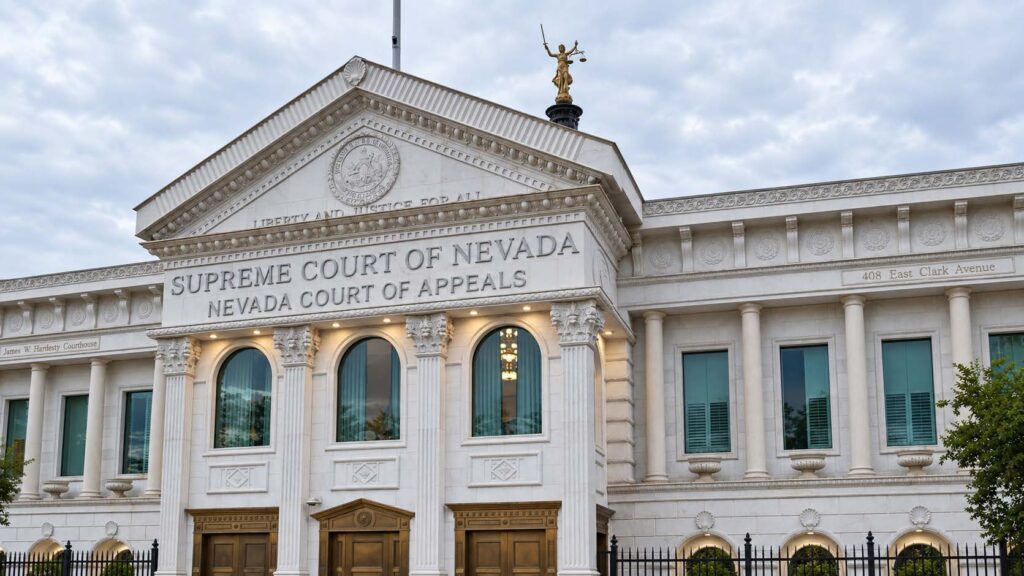
State claims begin in a Nevada district court, usually the Eighth Judicial District in Clark County or the Second in Washoe County, with appeals to the Nevada Supreme Court, which may assign the case to the Court of Appeals. Federal claims are filed in the District of Nevada with appeals to the Ninth Circuit, and a federal court facing a novel Nevada question may certify it to the Nevada Supreme Court, which is how Mack reached that court. Challenges to ballot initiatives, including the single-subject rule in NRS 295.009, are filed in the First Judicial District Court in Carson City on an expedited basis.
When to Involve a Constitutional Attorney
Constitutional claims carry short deadlines and record-building requirements that ordinary disputes do not. A constitutional law attorney in Las Vegas or Reno should be consulted when:
- A city, county, or state agency has adopted a regulation, overlay, or condition that materially reduces what you can do with your property
- A permit, license, or contract was denied or revoked without notice and a hearing
- Your business is subject to a statute or ordinance that treats it differently from similar competitors
- You have been sued over speech, a publication, or a petition and an anti-SLAPP motion may be available
- You are a public entity or official named in a Section 1983 or state constitutional claim
- A ballot initiative or redistricting plan affects your organization and the filing window is measured in days
How Hutchison & Steffen Handles Constitutional Matters
Hutchison & Steffen is a full-service, AV-rated law firm serving Nevada and the Southwest from offices in Las Vegas and Reno. For three decades the Firm has represented individuals, corporations, the State of Nevada, and government officials in constitutional litigation, both challenging legislation and defending it, before the Nevada Supreme Court and the United States Supreme Court.
The Firm’s Constitutional Law practice works with its Condemnation Law, Administrative & Regulatory Law, Public Entity Law, and Appellate Litigation attorneys. Readers following how courts review agency interpretations will find the Firm’s discussion of the Chevron deference standard useful. You can also review the Firm’s practice areas or meet the attorneys.
Frequently Asked Questions About Constitutional Lawyers in Nevada
What Is a Constitutional Lawyer?
A litigator who handles disputes over the limits of government power under the United States Constitution and, in Nevada, the Nevada Constitution. The cases involve takings of private property, due process, equal protection, speech and religion, and the division of authority between governments. The same lawyer may challenge a law in one case and defend one in the next.
Can I Sue the State of Nevada for Violating My Constitutional Rights?
Often, yes. Federal claims under 42 U.S.C. § 1983 may be brought against state and local officials and against cities and counties, subject to immunity doctrines and a two-year limitations period under NRS 11.190(4)(e). Since Mack v. Williams in 2022, Nevada also recognizes a damages claim directly under Article 1, Section 18 of the Nevada Constitution, without a qualified immunity defense.
What Is Inverse Condemnation in Nevada?
A claim by a property owner that the government has taken private property without filing a condemnation action or paying for it. The taking can be physical, such as flooding from a public project, or regulatory, such as an ordinance that eliminates the property’s use. Under Article 1, Section 8 and cases such as McCarran International Airport v. Sisolak, the owner is entitled to just compensation and may sue to recover it.
How Long Do I Have to Bring a Constitutional Claim in Nevada?
It depends. Section 1983 claims must be filed within two years under NRS 11.190(4)(e). Petitions for judicial review of an agency decision under NRS Chapter 233B generally must be filed within 30 days. Anti-SLAPP motions are due within 60 days of service under NRS 41.660. Ballot initiative challenges run on the election calendar and can be a matter of days.
Does Hutchison & Steffen Represent the Government or the People Suing It?
Both. The Firm represents individuals and corporations challenging statutes, ordinances, and agency actions, and it represents the State of Nevada, public entities, and government officials defending them. That experience on each side informs how the Firm evaluates a case and keeps its constitutional practice nonpartisan.
Contact Hutchison & Steffen About a Constitutional Matter in Nevada
If a government action is affecting your property, your business, or your rights, or if you are a public entity facing a constitutional claim, Hutchison & Steffen can evaluate the standard of review, the available claims and defenses, and the deadlines that apply. The Firm represents clients in Las Vegas, Henderson, Summerlin, North Las Vegas, Reno, Sparks, Carson City, and statewide Nevada.
Las Vegas: 702.385.2500 | Reno: 775.853.8746 | hutchlegal.com/contact
Las Vegas: Peccole Professional Park, 10080 W. Alta Drive, Suite 200, Las Vegas, NV 89145. Reno: 100 W. Liberty Street, Suite 765, Reno, NV 89501.
This post is for general informational purposes only and does not constitute legal advice. Prior results do not guarantee a similar outcome. Constitutional claims involve strict deadlines and standards of review that depend on the specific government action, the provision at issue, and the forum. Consult a qualified Nevada attorney about your specific circumstances.